- December 24, 2018, Monday, Christmas Eve.
- "THE HILLS ARE ALIVEEEEEE WITH THE SOUND OF MUSICCCC!!!!" With more than a billion people since 1965 who have watched the movie "The Sound of Music," starring Julie Andrews and Christopher Plummer, it is easy to find someone who has seen or at least heard of this musical. To those who have become die-hard fans just like me, a trip to Salzburg in Austria (note: NOT "Australia") is a pilgrimage as many parts of the movie were filmed in this city. If you're not a fan of "The Sound of Music," then you might have also head of a certain composed name Wolfgang Amadeus Mozart (yes, "the" Mozart.); Mozart was born in Salzburg. As a classically-trained pianist, the music of Mozart and other classical composers is something I grew up with and visiting a place related to Mozart of any of the other composers would also be some kind of pilgrimage (I did this with Chopin's grave last year, click
here). Needless to say, this was the city I looked forward to the most in my trip.
- I rode an early morning train from Munich to Salzburg. (You can book tickets through the OBB website, click
here; the OBB is Austria's official railway system.) It takes around 1.5 hours to travel fro Munich to Austria. They're quite close since Munich and Salzburg are almost beside each other. With Austria's geographic proximity to Germany, Austrians also speak a slightly different version of German, although English should not be a problem as with many European countries.
- It was a rainy morning that day, and the rain from Munich seemed to have followed me all the way to Salzburg. Upon arriving at Salzburg Hauptbahnhof (Salzburg Main Station,) I quickly walked to my hostel, which thankfully was just a 5-minute walk. I stayed at A&O Hostels Salzburg, which I highly recommend. For a hostel it looks massive with a slightly confusing layout, because it used to be a bread factory. Although it is a kilometer or more from the old town where most of Salzburg's tourist sites are, walking to the old town is not a problem. If not, there are buses and taxis right outside the main station for everyone's convenience. Salzburg does not have its own metro system, but the city center is quite compact and quite walkable.
 |
| Guten morgen Austria!! |
- Just when the sky calmed itself and the morning sun had just peeked from the clouds, I started walked to the old town. It was significantly colder than Munich or Berlin since it was so close to the snow-capped Alpine mountains. Temperatures during the day would sometimes drop to 0-4 degrees Celsius during the day, and with many open spaces and low houses, it was also a lot windier than big cities.
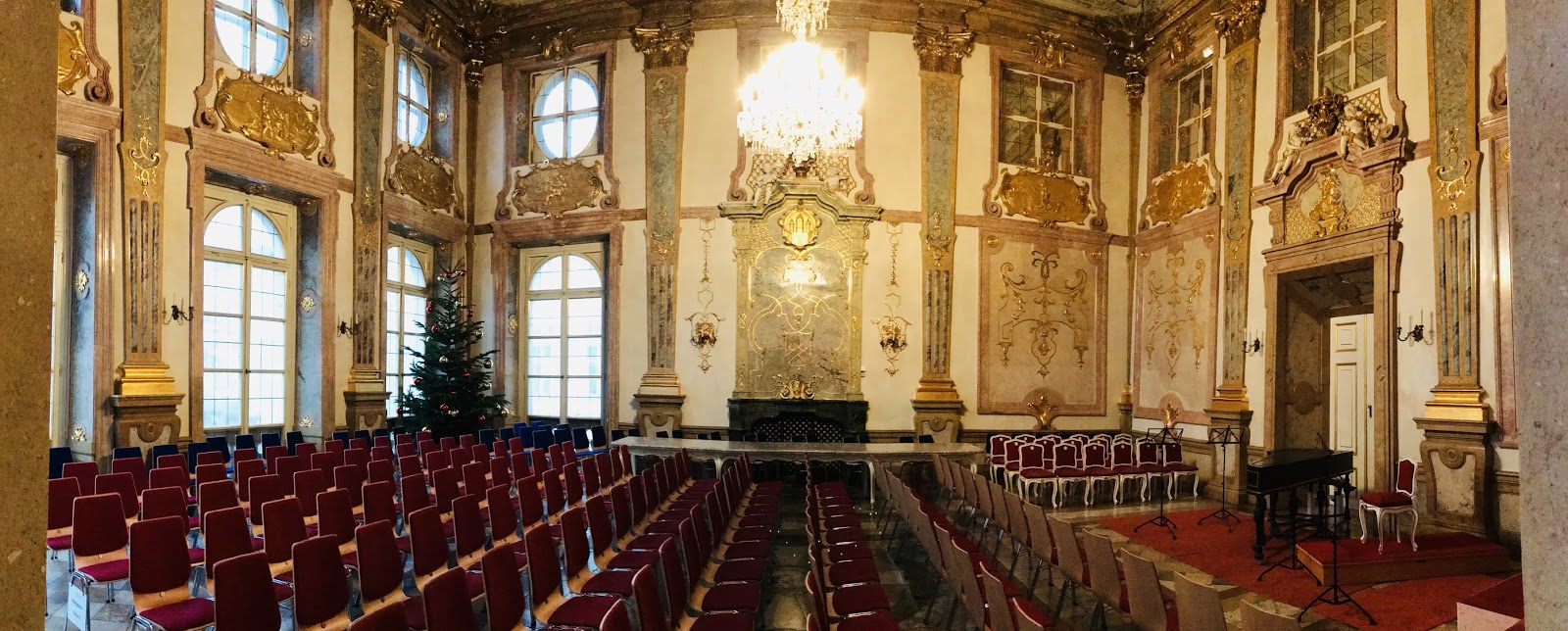
- I started my day with a visit to the Mirabell Palace and Gardens. The Mirabell Palace and Gardens (no entrance fee) was built in the early 1600s and served as a home of the early Salzburger royalty; Salzburg was its own country before being absorbed by Austria. Today, the palace is a multipurpose function hall and its gardens are visited by a battalion of tourists daily. In "The Sound of Music," this is where Maria (Julie Andrews) and the Von Trapp children sing the finale part of "Do Re Mi." A big part of the gardens was closed and the statues at the gnome garden were also covered by wooden boxes. This is in anticipation of the harsh winters of Salzburg; when the snow covers the flowers of the gardens, tourists might not see the flowers and carelessly stomp on them, and the centuries-old gnome statues might get damaged too. There are other attractions across Salzburg that are like this, and so I have concluded that Salzburg is perfect to see during late spring to early autumn. At least, there are far less tourists during winter, and I did not have a lot of problem doing my solo photoshoots.
 |
| Inside the Mirabell Palace. |
 |
| Marble Hall. |
 |
| Marble Hall. |
 |
| "Ti doooooooooooooooo~~~~sol do!!" |
 |
| The gardens with less flowers because it was winter. |
- From the Mirabell Palace and Gardens, I walked a couple a block south to visit the Mozart Wohnhaus, which was one of the many places where Mozart lived in his lifetime. Here, visitors can see some of his original pianos, violins, and other instruments. Unfortunately, photography is not allowed inside.
- Mozart Wohnhaus is not the only Mozart house in Salzburg. At the city center right across the Salzach River at the busy Getreidgasse Street is another Mozart house called Mozart Geburtshaus or Mozart's birth house. He was born in 1747 and stayed in family stayed in this house for around 30 years. Mozart was considered a musical prodigy, composing since he was 6 years old. This house shows some of his early compositions as well as his first violin. Photography, unfortunately, is also not allowed here.
 |
| Crossing the Salzach River on the way to the old town/city center. |
 |
| Mozart's birthplace. |
 |
| With Mozart. |
 |
| OK I found a loophole. This photograph was taken within the building of his old house, but not inside the exhibition halls where photography is prohibited. |
- Just like Mozart Wohnhaus, Mozart Geburtshaus has a museum shop full of Mozart and music things, but I would suggest buying them elsewhere as they are significantly cheaper in your regular souvenir stores at the city center. Mozart balls or "Mozart kugeln" are also sold at the both Mozart houses; these are chocolate balls with praline cream and pistachio marzipan fillings which I adore since I first tasted them many years ago. Like the other Mozart souvenirs, I don't suggest buying Mozart balls in the museum shops, and instead, I highly suggest buying them in groceries or supermarkets (not even at souvenir stores!) The prices of Mozart balls are significantly cheaper in groceries and supermarkets.
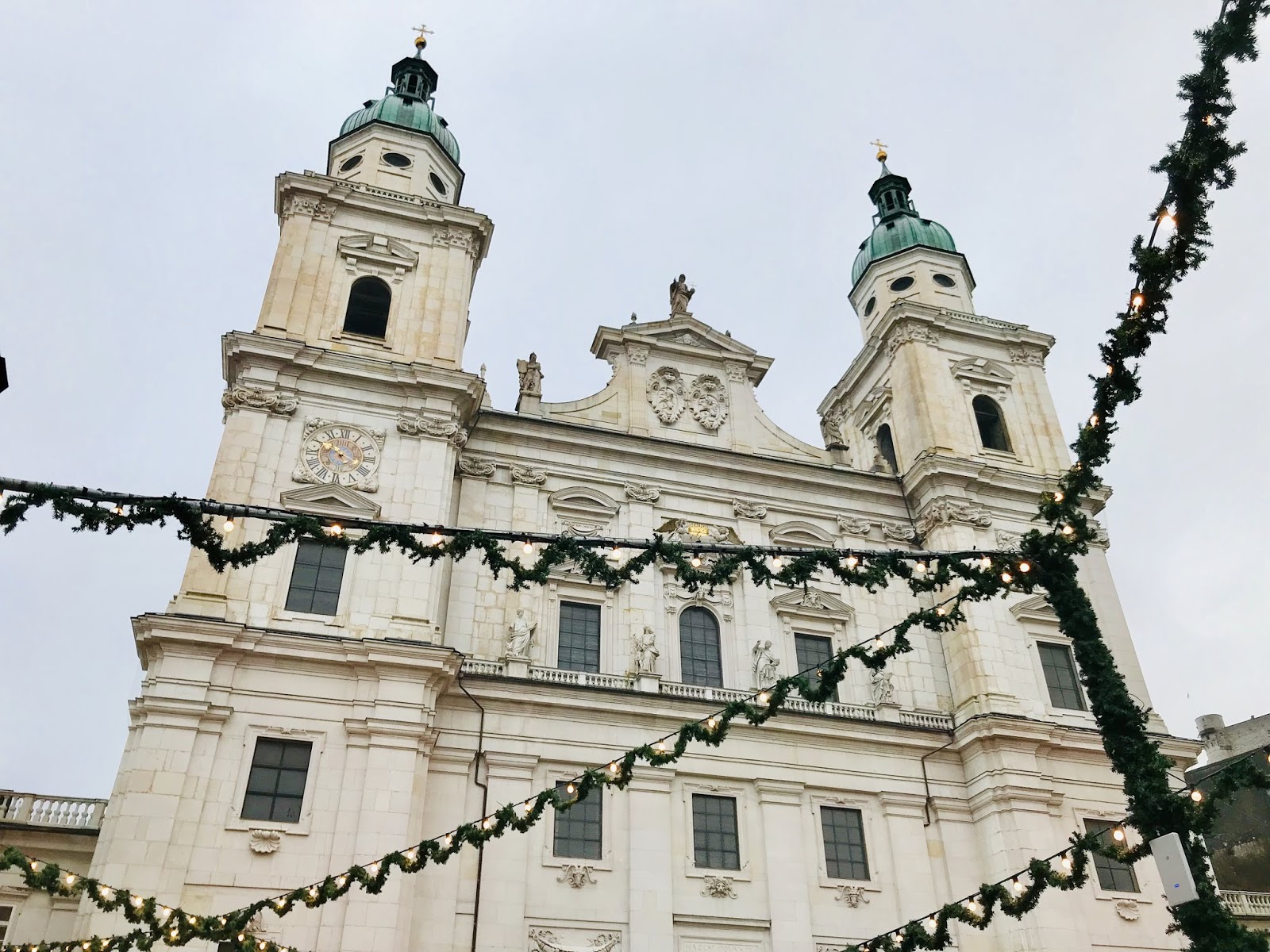
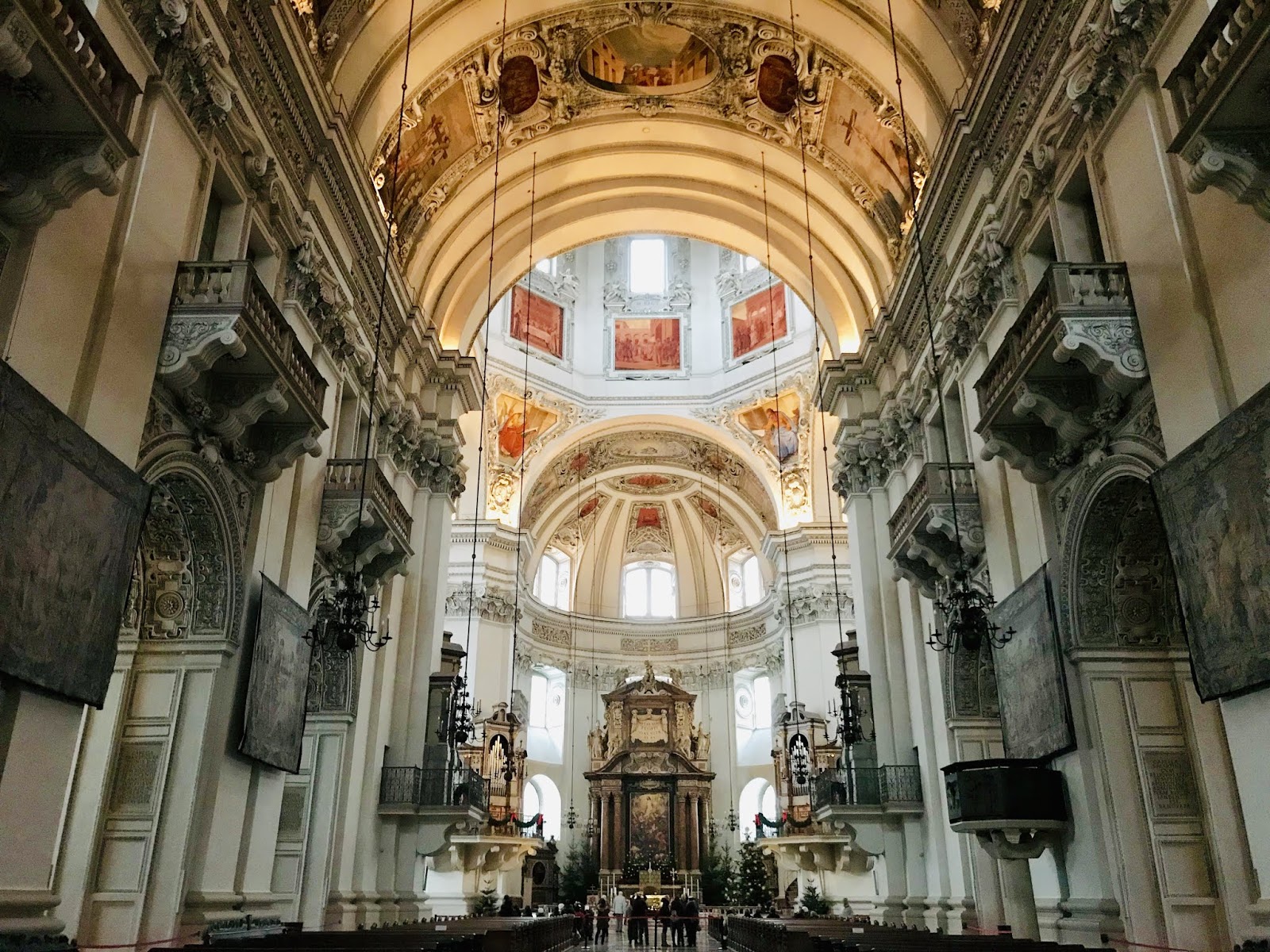
- From Mozart Geburtshaus, I went through the narrow winding streets of Salzburg until I found myself at the Residenzplatz (Residence Square) with the Salzburg Cathedral (Salzburger Dom) watching over it. Although the church was made in the 1600s, there were earlier versions of the church what go back as far as the 700s AD.
 |
| Salzburg Cathedral. |
 |
| Front the front side. Also, there was a lot of Christmas decor because there was a Christmas market there. |
 |
| Inside the cathedral. |
 |
| Dome. |
- The Residenzplatz area was also quite unusual to me because it is adjacent to another square called Kapitelplatz, now recognizable for its giant golden spherical art installation. However, throughout the centuries, the Kapitelplatz has mostly been known for being the plaza or public square with the best view of the Hohensalzburg Fort. Speaking of this, a narrow pathway in this square will lead visitors to two ways to go up the Hohensalzburg Fort: by funicular or by walking. Since it was raining and I wanted a more comfortable way to go up the hill, I decided to go by funicular. The funicular is special because while the current funicular appears modern, going up the castle/fort by funicular using the same tracks has been done since the early 1500s.
 |
| Kapitelplatz and the Hohensalzburg Fort on top of the hill. |
 |
| View from the top of the hill. |
 |
| I am here! |
- The all-seeing Hohensalzburg Fort was built in the late 11th century with extensions and renovations in the following centuries. This fort was made so huge and dominating it would frighten off potential attackers - and it did! Since attacks came rarely, the fort was barely used, making it a good investment; expenses would have been bigger if Salzburg engaged in more wars. Today, the fort has around three to four museums in its rooms. However, the view of Salzburg from its tower should not be missed!!
 |
| Former military uniforms. |
 |
| Former banquet hall. |
 |
| Canon. |
 |
| Chapel of Archbishop Leonhard von Keutschach at the fortress. |
 |
| Dungeon. |
 |
| View from the tower. |
- I rode the funicalar to flat ground and went next door to the St. Peter's Cemetery. It is one of the oldest cemeteries in Salzburg, and part of it was replicated in Hollywood to film the climax of "The Sound of Music."
 |
| St. Peter's Cemetery. |
 |
| Catacomb chapel. |
- Around the corner where the funiculat station is located, I walked the wet cobblestoned roads and slightly up the hill where the Hohensalzburg Fort rests to see the Nonnberg Abbey. It is the nunnery in the German world, being built in the 700s. AD. The Nonnberg Abbey was not only the place where "The Sound of Music" filmed the parts where the nuns congregated, but it was also the actual abbey where the real Maria von Trapp used to be a teacher and nun-to-be before serving the Von Trapp household almost similar to the movie.
 |
| This is the most of the abbey that one can see, since they don't usually allow people inside the prayer halls. |
 |
| View from the abbey. |
 |
| The Nonnberg Abbey from the outside; the scene beside my photo shows the Von Trapp children visiting the abbey in an attempt to talk to Maria after Maria runs away from the Von Trapp house. |
- Walking around Salzburg became increasingly difficult with the rain coming and going - and at some point it rained and snowed at the same time; so much for a "white Christmas." I went to the eastern side of the city where I visited the Felsenreitschule (just the outside) and went up the stairs at the side of the Felsenreitschule to see Salzburg from the Humboldt Terrace. The Felsenreitschule was built in the 1600s and used to be a riding school; it was later turned into a theater and is still used as such today. In "The Sound of Music," this is where the Von Trapp family sing for the last time before fleeing Austria. The Humboldt Terrace above the riding school does not only show passers by a breathtaking mid-level view of Salzburg, but it was also where Maria sang a few lines from the first verse of "I Have Confidence."
 |
| Felsenreitschule. (Go up the stairs to go reach Humboldt Terrace.) |
 |
| View from the Humboldt Terrace. (The church in the middle is the Salzburg Cathedral.) |
 |
| "Oh what's the matter with me, I always long for adventures to do the things I never dared...." - Maria singing "I Have Confidence." |
- Finally, I went farther west of the city just to see the fountain at Karajanplatz. Originally built in the 1600s, this fountain is quite wide because it used to be a place where people would wash their horses. Unfortunately, I wasn't able to see much of the fountain since it was covered in what I think is hard transparent plastic panels to protect the fountain's statue from the harsh winter weather.
 |
| Karajanplatz. |
- I was soaking wet from the rain that afternoon and decided to just ride a cab back to the main station. Many restaurants and stores have closed early since it was Christmas eve, and I just bought myself some takeaway McDonald's as it was the first restaurant I saw that was still open. I took a hot bath that early evening happily ate my McDonald's "Christmas Eve dinner." Although it was my first Christmas away from home, I was far from sad and lonely - especially with my long-awaited Sound of Music tour on Christmas Day!!
- Please don't forget to read about my other adventures in Germany, Austria, and Slovakia here:
GERMANY:
Berlin and Potsdam: Part 1
here, Part 2
here, Part 3
here, Part 4
here
Munich and Schwangau: Part 1
here, Part 2
here, Part 3
here, Part 4
here
AUSTRIA:
Salzburg: Part 2
here, Part 3
here
Vienna: Part 1
here, Part 2
here, Part 3
here
SLOVAKIA:
Bratislava: Click
here