- March 25-29, 2016, Friday to Tuesday.
- Directly after the events of Part 3 (click
here), I left Malacca in the mid-morning of Friday, and arrived in Kuala Lumpur's TBS station in the early afternoon. I found my way back to my friend Nathalie's place, as I was staying in her condo during my days in Kuala Lumpur (click
here for my earlier leg in KL.) I had lunch in Hartamas Plaza, which again is the mall right across my friend Nathalie's place, specifically in the small hawker center with cheap-but-good Malay comfort food. I rested for the rest of the afternoon since I was quite tired not only from Malacca, but also from my earlier trip to Penang (click
here) directly before my Malacca trip.
- I waited until Nathalie came home from her work before we met my Malaysian-Chinese friend Wen Shin, whom I met in India in 2012 (click
here,
here,
here and
here for my 2012 India delegation trip.) Wen Shin and her boyfriend Dason fetched me and Nathalie and off we went to have a fantastic Chinese dinner. Now I don't know exactly which part of Kuala Lumpur we were driven to, but we stopped in a temple that had a simple restaurant beside it (but within the compound of the temple.) This reminded me of the temple in Kaohsiung that I went to in 2014 (click
here to see) which had a few food stalls and even small restaurant within its compound. We had a simple meal of bak kut teh, braised pork, and Hokkien-style vegetables, but it was the best Chinese meal I had in Malaysia.
 |
| Thank you for the awesome dinner, Wen Shin and Dason!! |
 |
| Bak kut teh, braised pork, and Hokkien-style vegetables. I would've wanted to eat more (read - the whole pot.) |
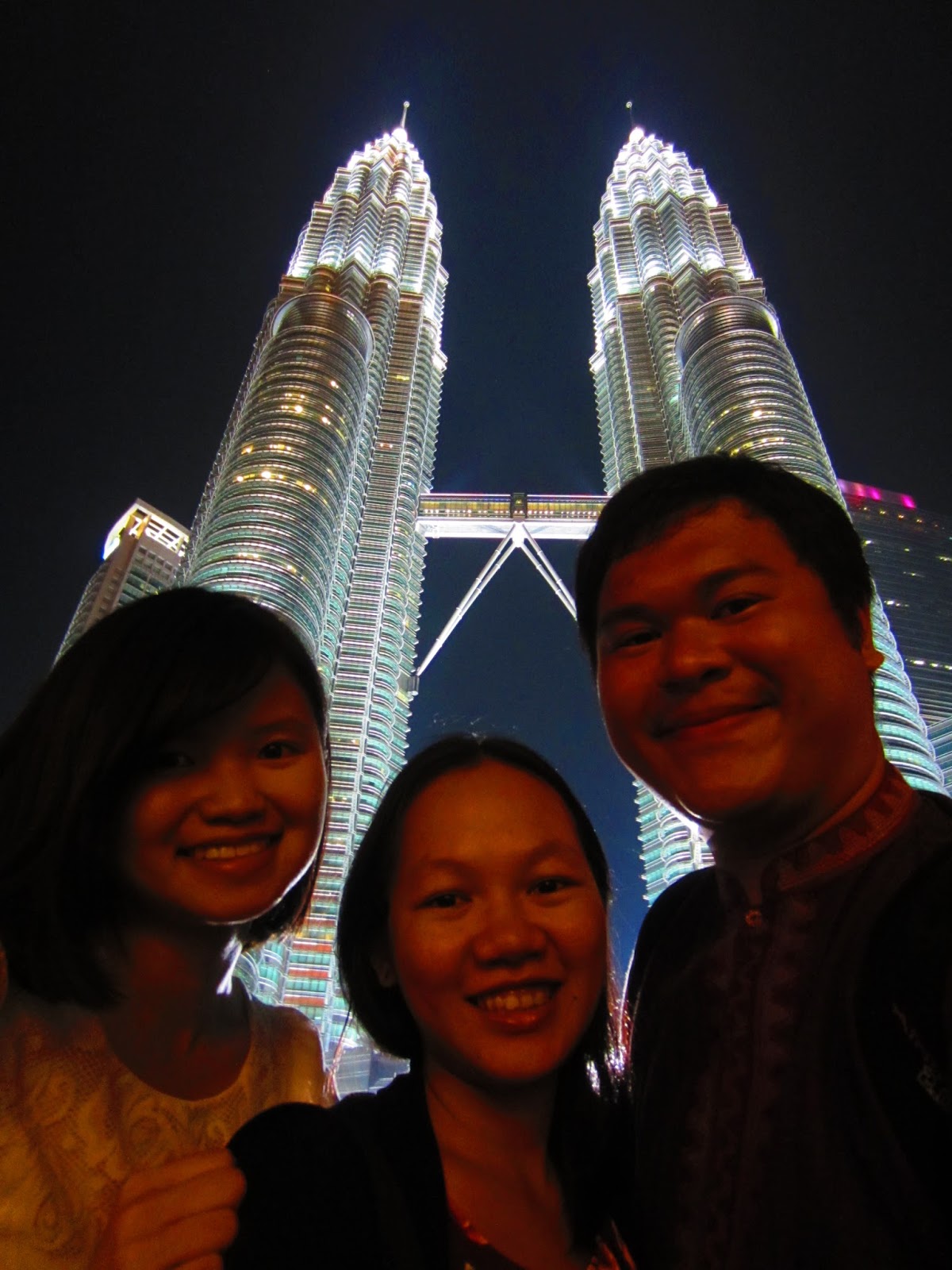
- After dinner Wen Shin and Dason brought Nathalie and me to the Petronas, and boy did it look marvelous at night!! From the day it was finished in the mid-90s until today, the Petronas Towers remains to be the tallest twin towers in the world; it houses the Suria KLCC mall, the office of the Petronas petroleum company, among others. We stayed around for a bit in the mall, until we caught the nightly dancing water show. The high fountains reminded me of Las Vegas' Bellagio (click
here to see my trip to Las Vegas.)
 |
| With Wen Shin and Nathalie. |
 |
| The majestic twin towers!! |
 |
| Dancing fountains. |
 |
| Suria KLCC and the twin towers. |
 |
| It looked like the smaller version of the Bellagio fountains, and with color. |
 |
| Look at that one go!! |
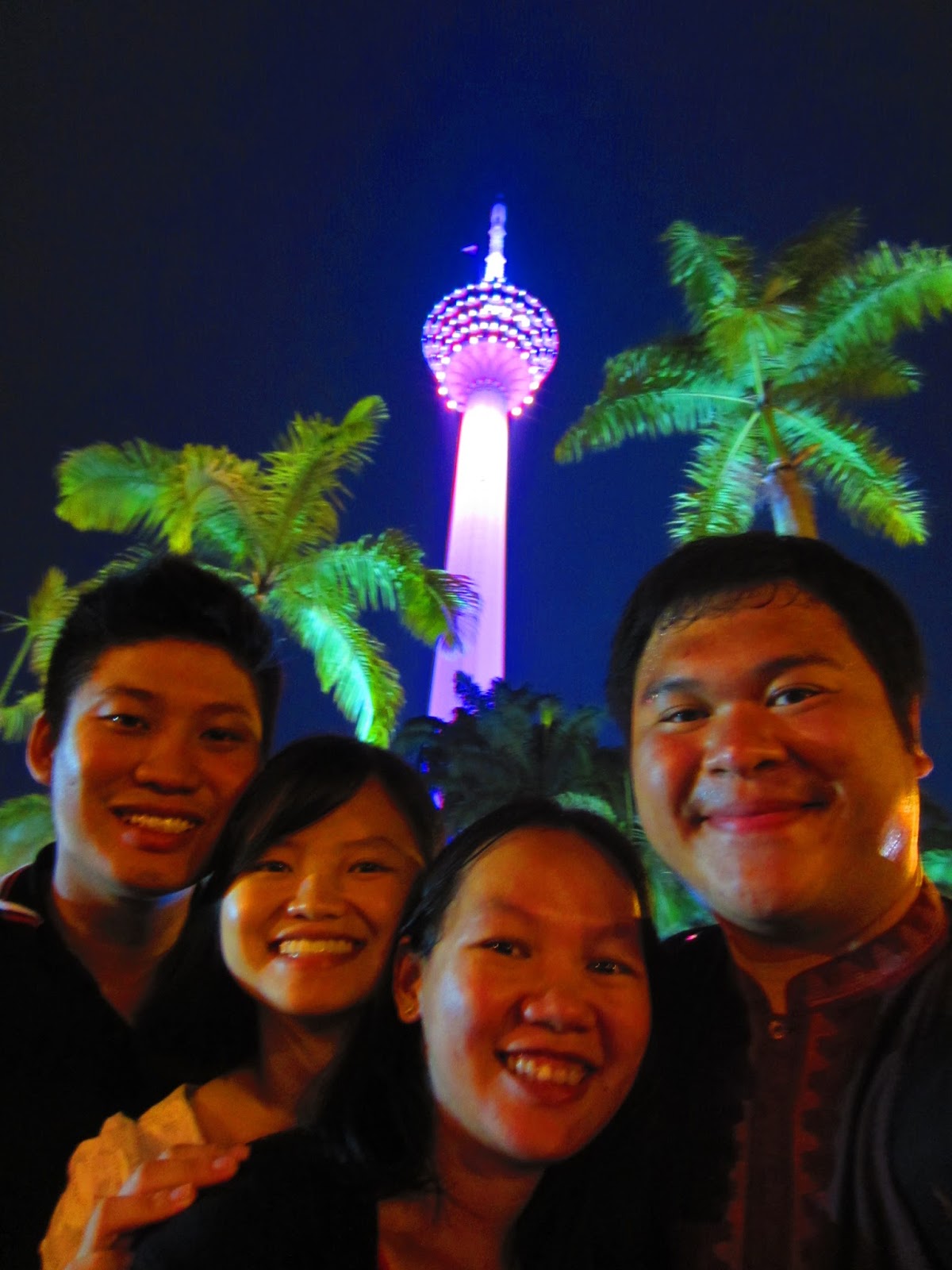
- Finally, Wen Shin and Dason drove us to the KL Tower, a communication tower on a hill that was finished also in the mid-90s as the Petronas. The well-lit tower (which changes colors whenever music plays,) reminded me of Seoul's NSeoul Tower, which is also a communication tower on a mountain that has nice lights at night (click
here to see my trip to the Seoul's NSeoul Tower.)
 |
| Colorful lightssss. |
 |
| You gotta love it. |
 |
| Dason, Wenshin, Nathalie, and me. |
 |
| KL Tower. |
- Wen Shin and Dason drove us home after the trip to the KL Tower, and I rested well for my whole-day out the next day; I knew I needed the energy for some climbing!! Still, I wished that I had more time to catch up with Wen Shin, and get to know Dason more.
- On Saturday morning I neatly wrapped my South-Asian mundu/dhoti and placed my matching thundu (sash) on one shoulder; I bought the mundu-thundu set in Brickfields during my first KL leg (click
here). I met my friend Kalpanaa whom I also met in India the same trip where I met Wen Shin. Kalapanaa promised me in 2012 that she'd bring me to the Batu Caves if I had the chance to go to Malaysia, since it was her "turf." Finally, she had a chance to fulfill that promise, and I had the chance to visit one of the landmarks that I longed to see in Malaysia - the golden Murugan statue in front of the Batu Caves. Murugan, also known as Kartikeya or Subramanyam in North India, is a Hindu god greatly revered by many South Indians. He is the son of Shiva, and the "brother" of the elephant-headed Ganesh. Murugan is usually described as the god of war. The golden statue itself was finished in 2006, though Hindu religious activities around the caves have started as early as the late 1800s. The Murugan statue is the second tallest Hindu statue in the world, and the tallest statue in Malaysia. The Hindu festival of Thaipusam, an iconic celebration in honor of Murugan which is in Tamil communities worldwide, is celebrated in the vicinity of the Batu Caves.
- Kalpanaa drove us to the Batu Caves, which was far up north and located in Selangor, just outside Kuala Lumpur. The Batu Caves is also reachable by train, so it's fairly easy to visit for visitors of Kuala Lumpur. There is no entrance fee generally, except for some attractions. Before going up the long flight of stairs, Kalpanaa and I had mandatory tourist photoshoots.
 |
| With my mundu and thundu in front of Murugan. |
 |
| With Kalpanaa. |
 |
| I love the details on the statue, particularly the creases of his mundu. |
 |
| Sunlight. |
- While walking up the stairs to see the main cave, monkeys ran here and there, either minding their own business, or minding the tourists' business. These monkeys come from the forest on the mountain where the Batu Caves are situated. I tried hard to stay away from the monkeys, as I've been warned countless times what these monkeys can do to you or your belongings. Of course, my camera's handy zoom function allowed me to take photos of them without going (too) near them.
 |
| Mother and child. |
 |
| Up the (long flight of) stairs. |
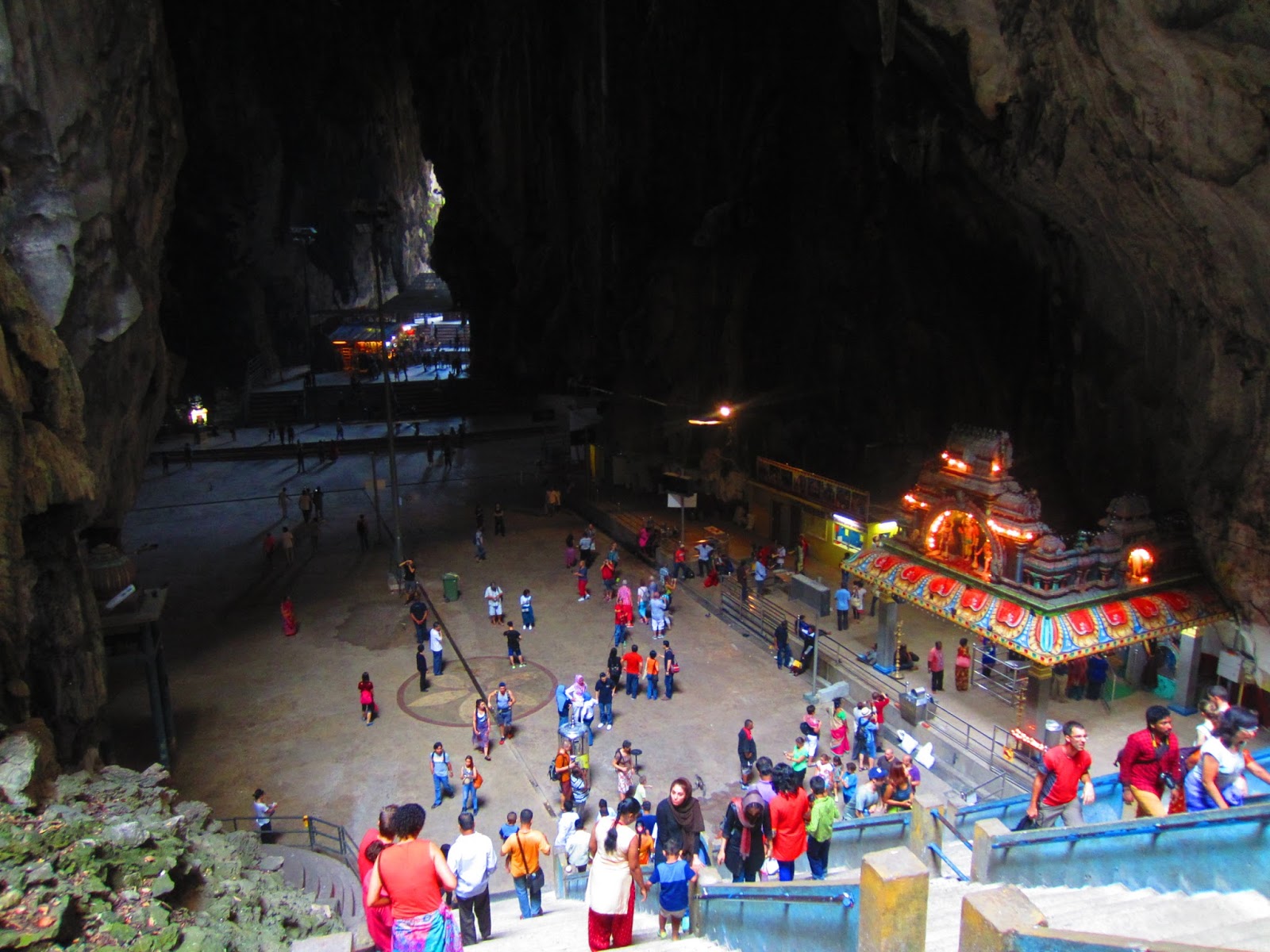
- Inside the main cave are two functioning Hindu temples and other Hindu shrines. Devotees always flock those small temples to pray or do rituals. Apart from those small temples, there was not much to see inside, although the idea of being inside a cave excited me, especially when I saw the hole that opened up to the top of the mountain, with the rays of the sun giving a dramatic lighting to the otherwise dark cave.
 |
| A smaller Murugan by the cave entrance. |
 |
| I was staring at this for a good 5 minutes. |
 |
| Temple in the cave. |
 |
| Nothing much inside, except for two temples. |
 |
| Temple and cave. |
 |
| Rituals. |
 |
| With a pot of milk on his head. |
- I went down the cave and proceeded to one of the lower-/ground-level caves. This particular one was dedicated to the Hindu Ramayana epic. The Ramayana is one of the most famous epics of India, and an epic close to my heart. This particular cave is easy to find, since the dignified statue of the monkey-god Hanuman was there to protect the cave, and also served as the marker of the cave. By the way, the Ramayana Cave had a small entrance fee. The cave itself is on flat ground, but to see the natural Shiva lingam (a rock formed in the shape of Shiva's phallus, a common Hindu symbol) would require people to go up a long flight of stairs within the cave.
 |
| View of the stairs of the main cave. |
 |
| Devotees going up the stairs. |
 |
| Hanuman in front of the Ramayana Cave. |
 |
| Krishna and Arjuna from the Bhagavad Gita. |
 |
| Vishnu. |
 |
| Kumbakarna, the sleeping giant in the Ramayana. |
 |
| The Ayodhyan throne. |
 |
| Natural Shiva lingam. |
 |
| View from the lingam. It was a long way up. |
 |
| Golden temple roofs. |
 |
| A last look at Murugan. |
- Later on, I finished looking at all the status that depicted scenes from the Ramayana, and met Kalpanaa outside the cave. I did some shopping at the Indian stores within the compound before we headed to the Orang Asli Muzium, which is within the same district (though a long drive) from the Batu Caves. I was grateful that Kalpanaa was there since the museum cannot be reached through walking, or the usual public transportation as it is located in a far-flung suburb (?) of Selangor. The museum, opened in the late 1990s, shows the society and culture of the "orang asli" (lit. "real/first people/s;") these groups of people are said to be the first ones to inhabit the Malaysian peninsula. The museum doesn't require an entrance fee.
 |
| Museum entrance. |
 |
| Orang asli wedding. |
 |
| Orang asli masks. |
 |
| Kalpanaa looking at orang asli houses. |
 |
| Kalpanaa is thinking of getting a place like the museum. |
- After the short visit to the museum, we had a long drive back to the center of Kuala Lumpur, and had lunch at Kader, located at Leboh Ampang, around the area of Jalan Masjid India and Masjid Jamek. Kader, one of Kalpanaa's favorite restaurants, serves South Indian food; it is known for its banana leaf platter. On the banana leaf, they put a ton of rice, 2 pieces of papadam, three kinds of cooked vegetables, and these are all refillable. Kalpanaa and I ordered an additional Indian butter chicken and fried shrimp. Since we're talking about authentic Indian food, the best way is to eat it the "authentic" way - by your hands! To tell you the truth, I don't usually eat with my hands so I think I ate messily, but because I loved the food so much, my banana leaf was "clean" by the time I finished. It was the best Indian meal I had in Malaysia (thank you Kalpanaa, I wish we had something like that here in the Philippines!!)
 |
| Will finish everything. |
 |
| I can have this all day!! |
 |
| Thank you Kalpanaa for bringing Kader to my life. |
- After stuffing ourselves with lunch we went to Tugu Negara (aka "National Monument") to see the monument, built in the 1960s dedicated to those who have fallen in numerous wars that Malaysia was a part of (including civil wars.) It did not take long before we finished visiting the monument, and after that we went to KLCC Suria to hang out.
 |
| Entrance to the Tugu Negara. |
 |
| Monument. |
 |
| In front of the Petronas. It's still majestic during the day. |
- We later drove to Publika, a mall nearer to where I'm staying, to meet up with some of the other delegates that I met in India - Suffian, and Agyeeta (from Indonesia but currently based in Malaysia.) I would have wanted to see more co-delegates from Malaysia if only I was able to inform/invite them way ahead of time; I got caught up with so many things before the Malaysia trip that I actually almost forgot about the trip itself. In Publika, Suffian, Agyeeta, Kalpanaa and I ate at Plan B. Plan B specializes in Malay-Western fusion cuisine.
 |
| Agyeeta, Suffian, Kalpanaa, and me. |
- Kalpanaa drove me home after the delightful dinner, and Nathalie and I had to prepare for our Sunday day trip the following day. Our agenda the next day was to visit Putrajaya. Putrajaya is a planned city south of Kuala Lumpur (near the airport) named after the first prime minister, Tuanku Abdul Rahman Putra, and "jaya" which is Sanskrit for victory. In 1999, this city became the administrative center of Malaysia, as almost all government offices are found here. This was done to decongest Kuala Lumpur. From a tourist's point of view, this city is charming because the buildings are made in modern styles with folk/cultural/classical influences. Since most of the buildings are government buildings, tourists can only appreciate the buildings from the outside. (An exception would be mosques, which, of course, allow visitors at designated times of the day.)
- Nathalie and I arrived at Putrajaya by riding the train from KL Sentral to Putrajaya, and riding the local bus to our first stop, the Seri Gemilang Bridge (built 2003), a ceremonial bridge with European influences that leads to the Putrajya International Convention Centre. The whole trip took around 30-45 minutes.
 |
| Passed by the Federal Territory Mosque (built 2000) on the way to KL Sentral. This was built in the Ottoman-Turkish style with Malaysian elements. I wasn't able to go to this mosque, though I could see it grandeur from far away. |
 |
| Seri Gemilang Bridge. |
 |
| Putrajaya International Convention Centre. |
 |
| See the European architectural influence?? |
- Next, we passed by the Palace of Justice, and visited the Perbadanan Putrajaya, with its modernized Persian-style gate, which led the way to Masjid Besi or the "Steel/Iron Mosque" (built in 2009; the long name is "Tuanku Mizan Zainal Abidin Mosque.") While walking and looking at my map, I noticed that the must-see places in Putrajaya are mostly situated in one long path, so it was easy to navigate. Although the distance of Putrajaya from end-to-end is supposedly "not walkable" according to Malaysian friends, Nathalie and I walked for a bit and stopped for a few moments at the landmarks, which made the supposedly long distance bearable. Putrajaya also reminded me of downtown Seoul around the Gwanghwamun area (click
here,) and since it was a Sunday and the government offices are closed, Putrajaya seemed like a deserted downtown Seoul.
 |
| Palace of Justice; it's shaped like a mosque. |
 |
| Perbadanan Putrajaya. Yes, it's based on Persian gates. |
 |
| The Palace of Justice from the inside of the Perbadanan Putrajaya. |
 |
| The Steel/Iron Mosque. |
 |
| "Putrajaya in one photo." |
 |
| "Allah" on the interior side of the Steel Mosque's dome. |
 |
| Nathalie and her mandatory robe (free rental.) |
- Later on we passed by the sailboat-shaped Seri Wawasan Bridge (opened 2003,) which serves as a main bridge in Putrajaya and an iconic structure as well. Nathalie and I continued walking until we reached the Putra Bridge (opened 1999.) I loved the Putra Bridge because of its royal Persian design, and it's not a surprise since it was based on Iran's Khaju Bridge.
 |
| Seri Wawasan Bridge. |
 |
| Perdana Putra (Prime Minister's Office) from afar. I don't know if it's just me but it somehow looks like something you'd see in Russia or Central Asia. |
 |
| The Pink Mosque from the Putra Bridge. |
 |
| Details of the Putra Bridge. |
 |
| With the Putra Bridge and the Pink Mosque. |
- Directly across the bridge was the Putra Mosque, also known as the Pink Mosque because of its distinct pink color. The color of the mosque owes itself to the rose-colored granite stones used to make this majestic mosque. Nathalie and I arrived just after the mosque started its prayer session, and so tourists were not allowed to enter; we needed to wait an hour before we could get in. To use our time wisely, we just decided to have lunch in the (air-conditioned) food court below the mosque. It was also where Suffian met us since he lived in Putrajaya.
- Suffian walked Nathalie and me around the mosque. Suffian mentioned that the design of the mosque was based on the Ottoman-Turkish mosques. The Ottoman Empire, based in present-day Turkey, was one of the largest empires in the world, with territories in three continents - Asia, Europe, and Africa. It was also one of the longest empires in the world spanning more than 600 years, from the early 1200s to 1922.
 |
| The Pink Mosque, up close. |
 |
| I love the details on the main dome. |
 |
| Nathalie. |
 |
| With Suffian. |
 |
| I love everything about this mosque!! From the geometric designs to the stained glass windows!! |
- Suffian had to take care of something after out visit at the Pink Mosque, so Nathalie and I were once again left alone to explore Putrajaya. Right beside the Pink Mosque is the Perdana Putra, or the Prime Minister's Office. I realized that the Prime Minister's Office is based on Malay, Islamic, and European influences, which makes it not surprising when it reminded me of structures that can be found in Central Asia - a geocultural region of Asia that was influenced by Persian, Turkic, Islamic, and European cultures.
 |
| Prime Minister's Office. |
- The northern part of Putrajaya (especially the area near the roundabout) was harder to navigate and the landmarks were either "hidden" or on top of hills, which made reaching them quite difficult especially for pedestrian visitors. For the early/mid-afternoon, Nathalie and I looked for the Moroccan Pavilion, which is one of the attractions of the Putrajaya Botanical Garden. It was said that this pavilion was a gift from Morocco to Malaysia, which is why the pavilion exists today. The pavilion had quite a hefty entrance fee for a small pavilion, so I decided not to go in anymore since we were also pressed for time that afternoon. We just took nice photos from the outside.
 |
| Moroccan Pavilion. |
 |
| Just look at that wall!! |
 |
| Welcome to Putrajaya!! |
- For the next hour or so, Nathalie and I tried hard to find the other attractions in the northern part of Putrajaya, but they were quite difficult to access, so we decided to just go directly to Alamanda Shopping Centre to meet Agyeeta, who lived near Putrajaya. Alamanda Shopping Centre was a big mall, and it was the only place that seemed jam-packed by the locals that day. (The tourist spots were, of course, swarmed by tourists.)
 |
| Agyeeta, Nathalie, and an almost unrecognizable me; my skin by this time was 10 shades darker. |
- We spent the rest of the afternoon with Agyeeta while taking advantage of the good air-conditioning system of the mall. Later on, Nathalie and I had to go a long way back to Kuala Lumpur. Nathalie and I had dinner in where else but Hartamas Plaza.
- The next day, I had a full day alone in Kuala Lumpur since Nathalie had to go to work. I called it my museum day since most of the places that I went to were museums. My first stop in the morning was the old Istana Negara or the old National Palace along Jalan Istana. This is different from the new/current Istana Negara that is located along Jalan Istana, near the Hartamas area (click
here to see the new palace.) The old palace is now a museum, and shows how it was used both as a home and a government office by the royal family. The old Istana Negara is quite difficult to access by public transport (which makes sense especially when it was still used as a palace,) so I had to use GrabCar (or a cab) to get there. A small entrance fee was required, and no photography was allowed in the palace, except for the separate throne hall. I liked the palace so much because the palace itself seemed cozy, which isn't usually something that pops into one's mind when thinking or imagining a palace; I would definitely want a house like that for myself.
 |
| Gate of the old palace. |
 |
| The old palace looks simple inside, but it looks fantastic inside. |
 |
| Sorry, no photos allowed inside. |
 |
| This gorgeous and intricately-designed street lamp in the palace complex. |
 |
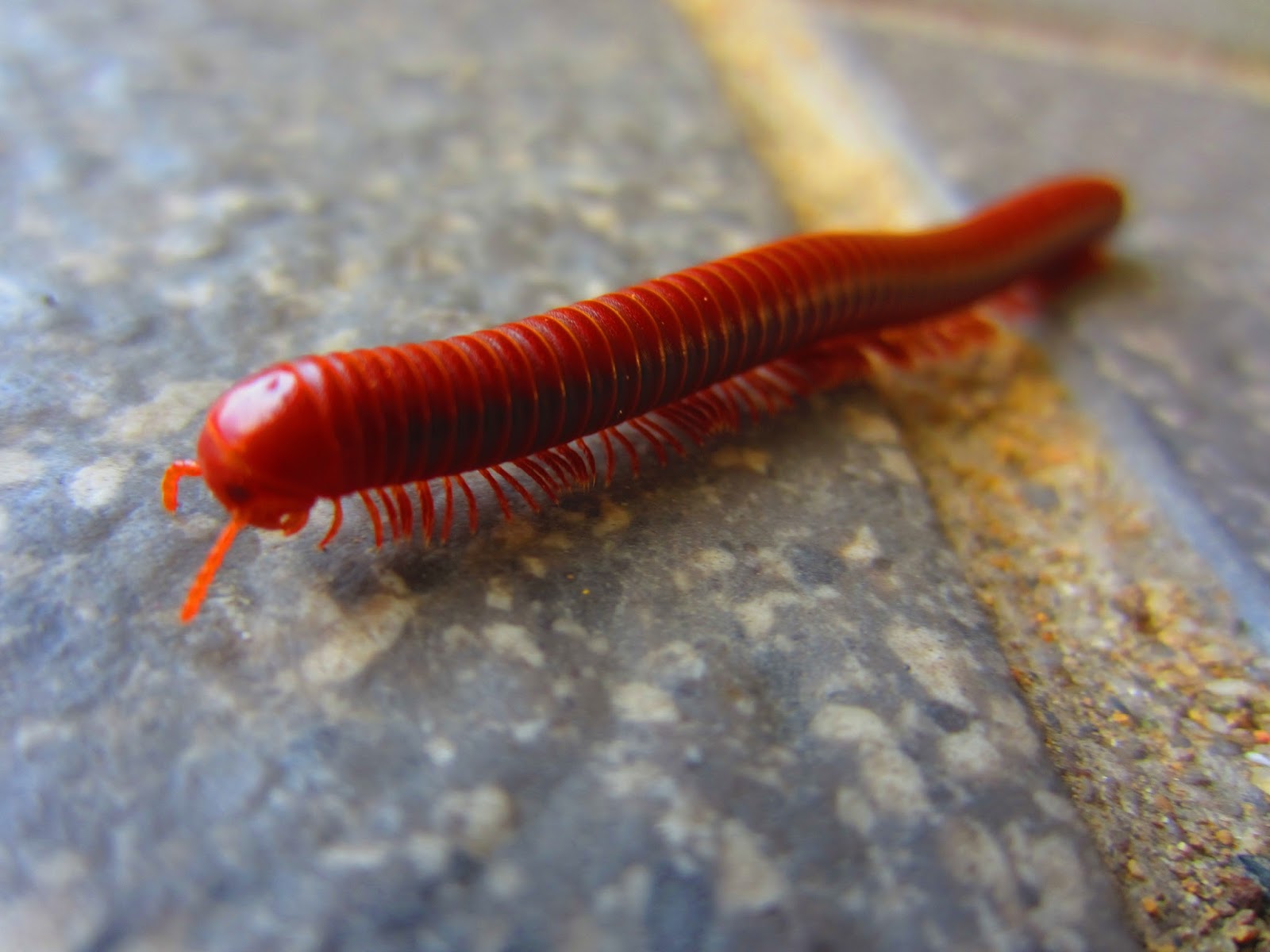
| Good morning Mr. Centipede. |
 |
| Inside the throne hall. |
 |
| To be able to sit on a throne like that. Oh, the chandelier was a beauty too. |
- I hailed a cab after my visit to the cozy old palace to go to the National Museum. The National Museum was supposedly near from the old palace, but because only roads and highways can be found outside the old palace, the only way to go was by hailing a cab or a private vehicle. The National Museum (Muzium Negara) is just a walking distance from KL Sentral Station, and is a walking distance to some of the other important museums and landmarks. An entrance fee is required to enter this museum. The compound of the National Museum houses two smaller museums as well - the Museum of Malay-World Ethnology (entrance fee required,) and the Orang Asli Crafts Museum (no entrance fee required.)
- The museum was built in the 1960s and has been improving its exhibits through time. For one, the exhibits of the former Museum of History, which is now the Music Museum (click
here to see,) were all moved to the National Museum in the recent years. The Natioanl Museum was not too big, but I loved all the pieces exhibited there, particularly the Indian artifacts that were unearthed on Malaysian soil.
 |
| Finally here. |
 |
| Orang asli. |
 |
| Not to sure if it's ar eal skeleton. |
 |
| Fantastic dragon's head; they placed this on boats. |
 |
| Ancient Avalokiteshvara statue. |
 |
| Replica of Indonesia's Borobudur Temple. |
 |
| Conversion to Islam by Malay sultans. |
 |
| Vest with Q'uranic verses. |
 |
| Throne. |
 |
| Saw this kind of dragon cannon in Brunei too. |
 |
| Don't be fooled. This keris was ALMOST AS TALL AS I AM. |
 |
| Love that Iban feathered headdress. |
 |
| Outside the museum. |
- Right beside the National Museum is the restored Istana Satu, a palace from the 1800s. The palace beloned to Sultan Zainal Abidin III of Terengganu. The small palace was made of wood.
 |
| Bedroom/bed area. |
 |
| I love the windows. |
 |
| Outside the small palace. |
- The adjacent Museum of Malay-World Ethnology mostly had Malaysian crafts, costumes, and accessories as their exhibit pieces, and so I stayed there longer than I should have. The museum wasn't big, but I think it was still a wonderful museum. The Orang Asli Crafs Museum beside the ethnology museum seemed similar to the Orang Asli Museum that I visited with Kalpanaa in Selangor.
 |
| Malaysian kites. |
 |
| Malaysian wedding. |
 |
| Making Malaysian kites. |
 |
| Inside the Orang Asli Crafts Museum. |
 |
| Old trains as outdoor exhibit pieces. |
 |
| Choo choo!! |
- After visiting these museums, I walked through the overpass and found my way to the Islamic Arts Museum. This museum was one of my favorite museums in the world. Though not as big as some major museums like the Metropolitan Museum of Art (click
here), I was highly impressed with not only the collection of Islamic art that was collected around the world, but also the way the presented some of the pieces. This museum also strengthened my realization of the legacy of Islam in Asian and North-African history and society. It was also a museum that provided access to some of the cultures that are rarely seen in Southeast Asia, such as Moroccan, Central-Asian, Ottoman Turkish, Mughal-Indian, and Safavid Iranian cultures. The museum also had miniature replicas of some of the world's most prominent Islamic establishments, such as the Saudi Arabia's Masjid al-Haram that houses the Kaaba (black box) in Mecca, or India's Taj Mahal that serves as the mausoleum of Shah Jahan and Mumtaz Mahal (click
here and
here to see the original Taj Mahal.) Also, I think that the (large) museum shop had a good collection of Islamic souvenirs, accessories and religious objects, clothing items, and books (both Islamic and non-Islamic.) I would've wanted to buy some books if only they weren't too expensive and too thick/heavy to bring back home.
 |
| Finally found you!! |
 |
| Islamic calligraphy. |
 |
| So much gold!! This is a Qur'an by the way. |
 |
| Replica of an Ottoman Turkish palace hall. |
 |
| One panel of the kiswah, or the fabric covering the Kaaba in Mecca. |
 |
| Ceiling art. |
 |
| In another hall. |
 |
| Chinese-Islamic art. |
 |
| Chinese-calligraphic style to write Islamic/Qur'anic verses. (The top one is "Allah.") Yes, there are MANY Muslims in China by the way. |
 |
| Taj Mahal. |
 |
| Ahhhh, brings back memories of India. |
 |
| Replica of the Masjid al-Haram. |
 |
| Moroccan headdresses. |
 |
| Central-Asian headdresses. |
 |
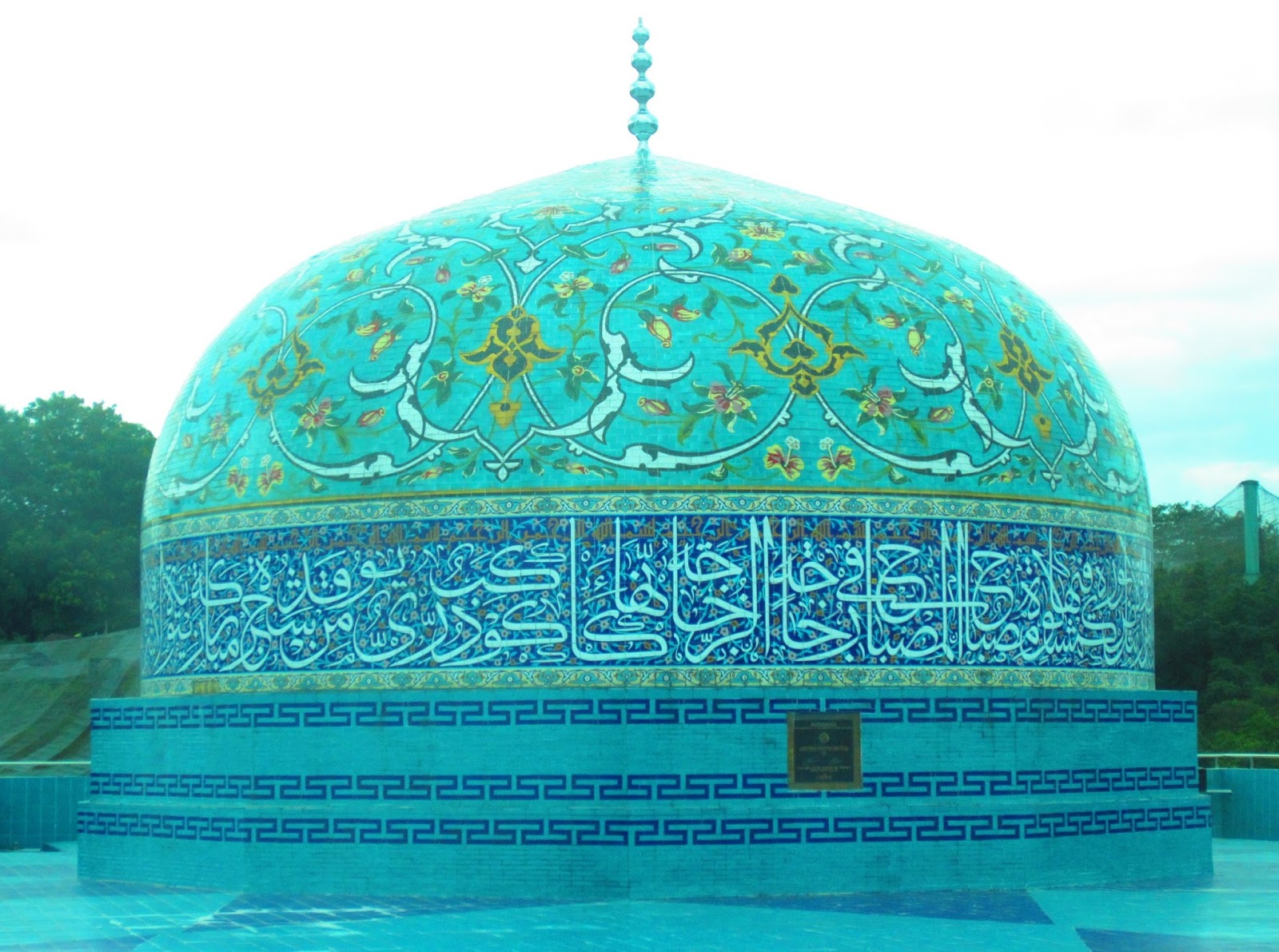
| One of the domes on the museum (seen from the inside.) |
 |
| Central Asian costumes and objects. |
 |
| Safavid-Iranian helmet. |
 |
| Everything from the Ottoman Turks. |
- I left the museum after a good hour of going around the Islamic Arts Museum, and had a simple lunch at the food stalls located at the National Mosque, located right across the Islamic Arts Museum. The National Mosque was built in 1965, and was done in a modern architectural style. Its roof for instance, looks like a folded octagon or a semi-opened parasol.
 |
| At the National Mosque. |
 |
| Part of the old railway station seen from the mosque, which is currently the KTM (metro) office. |
- I arrived there in the middle of the mosque's prayer session, so I had to wait outside like all the other non-Muslim tourists. At around 2pm, we were allowed to enter. Before seeing the actual prayer hall, I walked through the hall to peep in the Makan Pahlawan, or Heroes' Mausoleum. There lie the tombs of some of Malaysia's great Islamic leaders and politicians. Back at the main part of the mosque, I couldn't enter the prayer hall because I was not Muslim. Non-Muslim tourists could only see and take photographs from outside the prayer hall. I managed to do a photoshoot at the nice "jali-style" or netted walls of the mosque with my newly-bought modern-style sarong.
 |
| While walking through the halls, on the way to the Makan Pahlawan. |
 |
| Some of the great leaders in Makan Pahlawan. |
 |
| The mosque's minaret. |
 |
| Old railway station from the mosque. |
 |
| Looks a bit European, but no, it's the prayer hall!! |
 |
| I like the stained glass windows of the mosque. |
 |
| I think this was a competition on reciting the Qur'anic verses. This is quite common within madrasas and even on an international level. |
 |
| The jali-style wall. |
 |
| Mandatory shoot. Bought my rather modern salong in one of the stalls in the National Mosque. |
 |
| Pretending to pray. (No I am not Muslim.) |
 |
| The best shot of the mosque I could take. A better shot would be from a higher level, probably from the metro or one of the buildings around the mosque. |
- After going around the mosque, I went to the old railway station (used in the 1800s by the British), initially only wanting to see what it looked like from the outside. It was built with a mix of Mughal-Indian and British styles, just like the KTM Ltd. office right across the street. It looked like a dilapidated building, only to realize later on that the old railway station was still being used!! The Kuala Lumpur Station of the KTM Line was located in the old railway station, which also happened to be the metro station I was looking for to ride back to KL Sentral. From KL Sentral, I went back to Nathalie's place and rested for the rest of the late afternoon until Nathalie came home. We had dinner at Hartamas Plaza, and I packed most of my things since the day after was my last full day in Malaysia.
 |
| Europe?? India?? Malaysia baby. |
 |
| I like the Indian-European-Moorish architecture of this building. Who would've thought that it's still being used until today?? |
 |
| KTM Ltd. office building. |
- On my last day, I went to the Masjid India Bazaar area to look for cheap-but-good baju melayus and sampins (the short sarong placed on baju melayus.) From the Masjid India Bazaar, I walked to Jalan Tuanku Abdul Rahman (Jalan TAR for short) since most of the textile and baju-melayu/kebaya stores were located there. I spend the whole morning walking to and fro the street since I wanted to find the best deal for my baju melayu. Some bargaining may be allowed, even inside the big stores. I was able to find one baju melayu set including a sampin, and another individual sampin. I could tell that I got a good price for the things I bought because my Malaysian friends were quite (pleasantly) surprised when the found how much I was able to buy mine (around 100 ringgit for a baju melayu set, including a well-embroidered sampin. The normal price would be 150 and above, without the sampin. A sampin, individually, would cost around 38-50 ringgit, depending on the quality, but the individual sampin I got was only 25 ringgit.)
 |
| Masjid India. |
- I rode the train from Masjid Jamek to KL Sentral, and I had lunch there. I went back to Brickfields after lunch, since it's just located behind KL Sentral. I don't have photos from my second Brickfields trip, but you can see photos from my earlier trip to Brickfields
here. I went through the shops to find a good casual kurta, which I eventually did. I was able to get a really cheap printed Mysore sari in one of the stores too (only 12 ringgit!!)
- When I realized that I had finished everything that I needed to do, I went back to Nathalie's place, finished packing my things and rested the whole afternoon. I had a final dinner with Nathalie before I went to the airport. Just when I thought that I had nothing to look forward to, Suffian informed me that he wanted to meet me at the airport before I fly back to Manila.
 |
| Thank you Nathalie!! You're back in Manila (by the time I'm writing this) so I'm sure we'll see each other again. |
 |
| Thank you for my dessert Suffian, and thank you for meeting me at the airport!! |
- Suffian left me after I was about to check in. I was so tired since it was late in the night and I couldn't sleep; my flight was 1 in the morning of the 30th. I can't help thinking that I had done so much and learned so much in the past 10 days in Malaysia. Malaysia is a wonderful country, almost familiar (since many places reminded me of my country) but still interesting, new, and royal as well. I was impressed with how Malaysia was able to preserve a lot of of its cultural heritage sites and how they were able to strongly maintain the heritage of the different ethnic groups, all these despite constant modernization. I know and understand that Malaysia has a lot of issues (political, social, racial, etc.,) all of which I've read in books and articles, or heard from the news or Malaysian friends, but I think something can be learned from Malaysia as well in terms of these aspects. I know it's very cliche to say this, but after visiting Malaysia, I have now experienced and (further) realized why Malaysia is "truly Asia." (Please don't forget to read Part 1
here, Part 2
here, Part 3
here.)
Epilogue:
- Well not so much an epilogue, but remember who in Part 1 I said my family told me that they weren't going somewhere during the Holy Week so I ended up going alone in Malaysia? Well, a week before I left for Malaysia, my mom told me that my dad had a spur of the moment decision to go to Malaysia. My sister was tasked to book their plane tickets, and they were in KL from Maundy Thursday to Black Saturday, arriving in Manila on Easter Sunday. I wasn't able to meet my family since I was either not in Kuala Lumpur, or I was scheduled to meet some Malaysian friends that day.
- After coming home, we all shared stories, and my mom regretted not tagging along with me. She told me that I saw more even within KL (since my family didn't have the time to go out of KL,) and since I went out of KL to see the heritage sites, my mom wished she had seen them too. My mom told me that she just spent most of the time in malls in KL since my sister wanted to do some shopping, although they did some minor sightseeing, mainly around Merdeka Square. She told me that I shouldn't feel bad (of course I don't haha) for not tagging along with them, or not having them tag along with me. I just told my mom that her consolation of tagging along with my mom and my sister is that they saw Lee Min Ho in the flesh. Yes, they did!! Lee Min Ho was in Malaysia when my family was in KL, and at that time I was still in Malacca. They saw him in Suria KLCC. Well, at least my mom felt happier after I reminded her of Lee Min Ho.