Showing posts with label blue mosque. Show all posts

Wednesday, January 15, 2020

(Part 8) Traversing Turkey: Istanbul's Secrets!!

- Dec. 30, 2019, Monday.


- Istanbul is a vibrant city of surprises despite its calm ambiance - or maybe I felt it was rather "calm" since it was winter when tourism experiences its low season. Although I wouldn't say that it isn't as colorful on the outside as I thought it would be (as compared to India's colors that overwhelm you the moment you land in one of its main airports,) much of Turkey's surprises can be found indoors - inside palaces, restaurants, museums, and bazaars.

- We started our day after a short photo stop in front of the Blue Mosque and the Hagia Sophia, before returning to the Topkapi Palace, which our tour group visited a couple of days prior (see here). My family decided to visit it again - now that we were on our own - as we weren't able to fully explore all its exhibition halls, including the palace harem. The Topkapi Palace, the Blue Mosque, and the Hagia Sophia are located near the Sultanahmet tram stop. As explained in my earlier post, the Topkapi Palace was built in the 1400s as the main palace after the Ottomans took over Istanbul after defeating the European Byzantines in the 1200s, and established their Islamic Empire from this old capital.

Hagia Sophia.
Full Turkish-inspired garb in front of the Blue Mosque.
Another one in front of the Blue Moque.
- We started our palace visit by going inside the harem, which has a separate ticket from the main palace. The harem contains many of the royal family's private chambers, and the halls of the palace's female slaves (i.e. concubines,) the queen mother (Valide Sultana,) and the eunuchs who run the harem. Apart from the royal family, consorts, and the eunuch guards, no one was allowed beyond the harem. Because of this, many of what happens in the palace (sometimes, even the development of political agenda) actually take place in the harem and its more than 400 rooms.

View from the entrance of the harem.
Chamber of the Queen Mother.
Decorated, don't expect any less.
Royal toilet.
The highlight of the harem, the imperial hall (seat at the right is the sultan's throne.)

Hall of the favorite concubines.
Harem mosque.
The golden road: the main entrance of the harem. Some say it is called as such because of golden coins thrown to the concubines during festivities, but it may also be called such as it is the "road" to the sultan's and the princes' private chambers in case a concubine was chosen to spend the night with the sultan or any of the princes.
- After leaving the harem, we were able to explore much of the palace, which included several ornamented kiosks, the library, kitchen, and the council room. The council room stood out because of its golden color.

Library.
Outside the Baghdad Kiosk, which was built after Sultan Murad IV captured Baghdad in the 1600s.
View of the Bosphorus (and the Galata Tower) from the terrace.
The actual throne of Sultan Mahmud II, from the 1800s.
The circumcision room, and yes, it functions as what the name of the room suggests.
The Sultan Ahmed III library fountain, located outside the library of the same name. It was built in the 1700s as a benefit to the Enderun School students. The Enderun School is the building which houses the library, and the school was used to educated the royal family, as well as non-Muslim boys that the Ottoman palace took from different territories as a way to train them to be good Muslims and eventually serve the palace as able guards and soldiers.  
Interior of the council hall.
Where council meetings were held.
Council hall entrance.
- We had a regular Turkish kebab lunch before visiting the Basilica Cistern, also located in the old town. Built in the 6th century during the rule of Byzantine ruler Justinian I, it functioned as any other cistern - an underground water storage. However, what makes this cistern interesting is not only its size, but also the appearance of the pillars, as well as its creative use of Medusa heads formerly found in a different building, but were repurposed as pillar bases.

Who knew that this existed under the modern roads of Istanbul!!
Hen's eye pillar.
Sideways Medusa.
Upside down Medusa.
- From Sultanahmet tram stop, we rode the tram to Eminonu tram stop to visit the Spice Bazaar, also called the Egyptian Bazaar. Built in the 1600s, roughly two centuries after the Grand Bazaar was built, this bazaar was the main center of spice trade in Istanbul, while the Grand Bazaar remained the main center for textile trade. The Spice Bazaar was initially called the "New Bazaar" as it was newer than the Grand Bazaar, but eventually gained the name "Egyptian" Bazaar as it was built from the revenues of Egypt, which back then was part of the Ottoman Empire. Today, spice markets still line the halls of the bazaar. However, what I really wanted to see were the shops OUTSIDE the Spice Bazaar, which sold cheaper souvenirs, and Turkish-style play jewelry.

Spice Bazaar.
By the way, just a tip: if you say "market" in Turkey, that usually refers to a grocery or a supermarket. If you want to visit places such as this one, it's called a "bazaar."
Spices!
Can you show me your world of spices hmmmmm??
I love the paintings and calligraphy on the ceilings and walls of the bazaar.
- To take cover from the rain and to have some time to rest, we tried this restaurant that sold a popular Turkish snack called "kokorec" ("ko-ko-rech.") It can come in the form of a burrito/roll or a sandwich, but do note that the meat filling is actually lamb or goat intestine and other innards. As a Filipino who eats food like isaw (grilled intestine) and sisig, the kokorec was a pure delight! It did not have too much for the game-y smell or taste (maybe it's just me, or depending on who made the kokorec), and you'd feel that you're just eating any other kind of ground meat.

Kokorec.
- We went back to the hotel after eating our kokorec as it was getting dark, and the rain would not stop falling. Although the rain really did....rain on our parade that day, it did not stop me from exploring the (not so hidden) secrets and colors of Istanbul behind its walls and under its roads!!

- Don't forget to read about my other adventures in Turkey:

Part 1, Troy and the Trojan Horse: here

Part 2, Virgin Mary's House and Ephesus: here

Part 3, Laodicea on the Lycus and the Alien Travertines: here

Part 4, Konya: here

Part 5, Cappadocia: here

Part 6, Istanbul's Royal Old Town: here

Part 7, Istanbul Between Continents: here

Part 9, Istanbul on New Year's Eve: here

Monday, January 13, 2020

(Part 6) Traversing Turkey: Istanbul's Royal Old Town

- Dec. 28, 2019, Saturday.


- Before anything else, let me get things straight: Istanbul is not the capital of Turkey, and it has been this way since 1923!! Many people think that Istanbul is the country's capital because it is currently the main transportation and tourism hub of Turkey, and not to mention that it was the capital since the Byzantine Era (when it was named "Constantinople") up until the Ottoman Era that overthrew the Byzantines. Mustafa Kemal Ataturk, Turkish commander turned statesman who dethroned the Ottoman monarchy, moved the capital from Istanbul to Ankara when he became president in 1923 since Ankara was closer to the center of the country, making it easier to reach other provinces more easily as compared to Istanbul in the far northwest. Despite not being the country's capital, it still holds the title of being the only city in the world that is located in two continents: Asia and Europe.

- From our hotel in Bolu, we took a 3-hour drive to the old downtown of Isanbul called Sultanahmet. Being in downtown Istanbul reminded me of Manila: the traffic was horrible. Fortunately, transportation within Istanbul is efficient, such as the tram or metro lines, making it easier to go around the city within minutes. Also, when talking about Sultanahmet, most of the historical sites are within walking distance from each other.

- We first visited the Blue Mosque, also known as the Sultan Ahmet Mosque. It was built in the 1600s by Sultan Ahmet I as a reminder of Ottoman power despite his losses in wars. It was a controversial mosque as it used the funds of the state, and was built across another royal mosque, the Hagia Sophia. It is called "Blue" Mosque because of the blue tiles that line the mosque's interiors.

The Blue Mosque.
We couldn't see the whole done because of renovations. We noticed plenty of renovations going around the city when we were in Istanbul.
Although most of the tiles were blue, there were also other multi-colored tiles that lined the walls and domes of the mosque.
Mosque interior.
The Blue Mosque from outside its walls.
- After lunch we visited the Topkapi Palace ("top-ka-puh," the -u sounds like it does in words like "drug" or "hut"), the first palace built after the Ottomans took over Constantinople in the 1200s, and named the city "Istanbul." Our tour group was not able to go around the palace that much as it had several courtyards and plenty of halls to visit. However, in one of the exhibition galleries that we visited, we saw some sacred relics that may be deemed as some of the holiest. These artifacts include the staff of Moses when he parted the Red Sea, the sword of David, the footprint and beard of the Prophet Muhammad, the keys to the Kaaba in Mecca, and so on. (No photography inside, unfortunately.) I will post more things about the Topkapi Palace as my family visited it a second time on another day to explore its endless halls.

The throne room.
The Mecidiye Kiosk, the last kiosk built in the palace. This building, as you can see, is European inspired.
View of the Bosphorus Strait from the palace. This is the strait that separates the European side and Asian side of Istanbul. (The buildings and mountains in the photo are on the Asian side, while I was standing on the European side.)
One of the inner courtyards of the palace. The building to the right is the palace harem.
- Just beside the Topkapi Palace is the Hagia Sophia, also known as Ayasofya. This building, to me, is one of the most interesting buildings of the city. It was initially built as a church by the Byzantines and functioned as such until the 1400s, a century after the Ottomans took over the Byzantine Empire. Since the Ottomans were Muslims, they converted the church to a mosque in the 1400s, and added four minarets or towers around the mosque. Several centuries later, in 1930s, it was decided that this mosque will function as a museum, and it still does today. However, the current president of Turkey Recep Tayyip Erdogan is thinking of turning it back to a mosque.

Hagia Sophia.
Entrance to the main hall.
It was quite difficult to take a photo in the main hall since half of it was being renovated.
At the second floor - which is actually like the 6th floor as it was so high up.
Byzantine Christian wall paintings.
- Finally, we had some time to shop in Istanbul, and one of the best places to do that is the Grand Bazaar. We rode a tram from Sultanahmet Station just behind the Hagia Sophia, and got off at Bayezit Station which was two stops away. Our tour guide told us that had we used our tour bus to reach the bazaar, it would take us around an hour even though it was close due to traffic, as compared to using the tram which got us to the bazaar in 3 minutes. Roads in Turkey tend to be narrow just like in Europe, as these cities were built in the ancient days when wider roads were not yet necessary.

One of the many many MANY entrances of the bazaar.
- The Grand Bazaar was built in the 1400s as an indoor market, and remains as such today. Do note that this place is mainly catered to tourists so prices of things may be too high, and bargaining is expected. I once bought a necklace originally priced at 150 lira, but got it for 50 - only to find out that necklaces like that cost a mere 20 lira outside the bazaar. So do bargain A LOT. If time is a luxury, I suggest looking at the stores right OUTSIDE the bazaar as they may be priced way lower.

The main corridor.
The smaller corridors were more decorated.
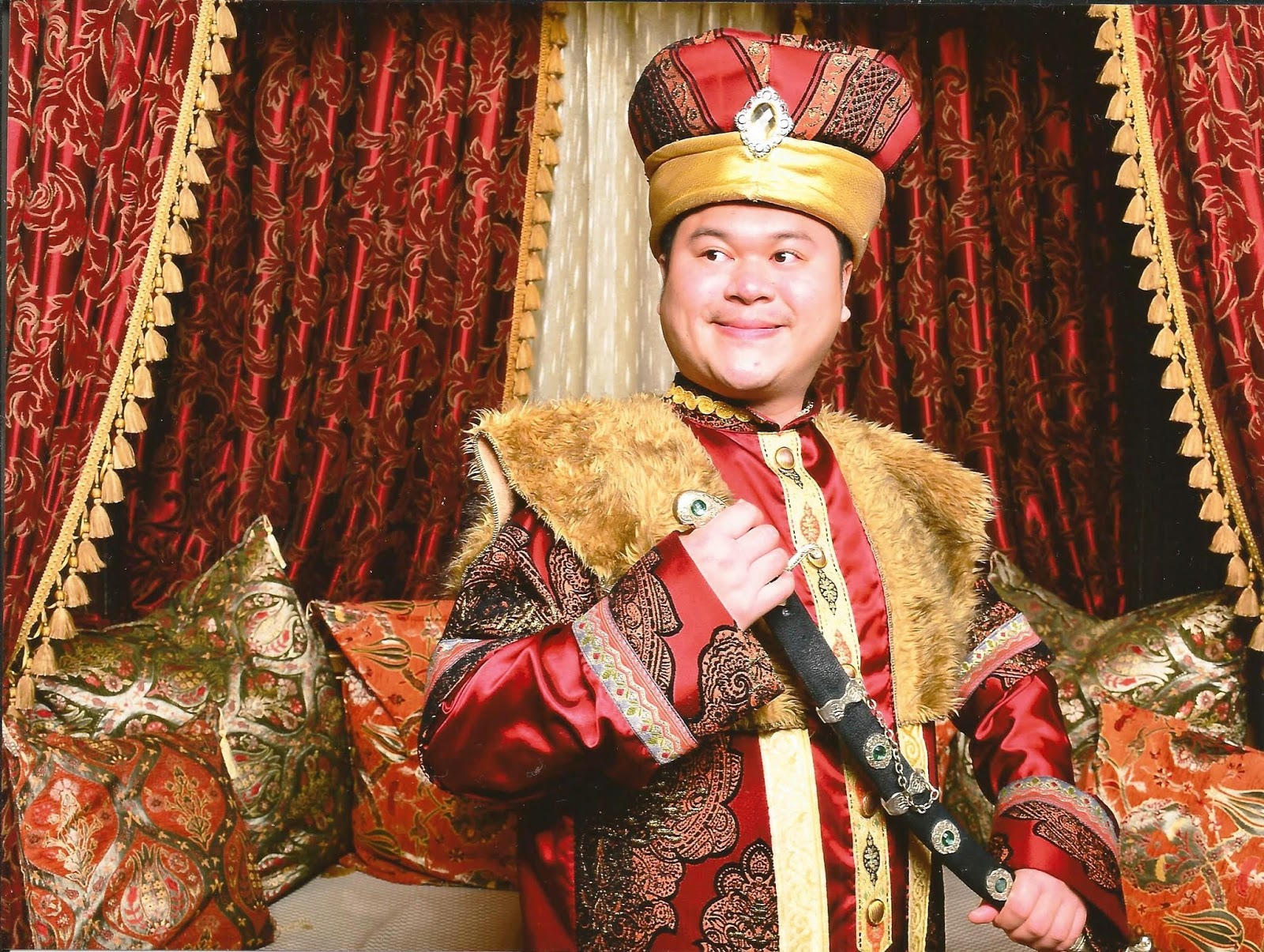
- Aside from shopping, there are also photo studios around the bazaar where you can wear a royal Ottoman costume and have your photo taken. I'm usually a sucker for these since I'm a costume enthusiast, and since I don't usually get to buy really elaborate costumes unless I'm sure I can wear them on a regular basis. These photoshoots cost at least 40 lira (which isn't bad compared to other some countries) for one printed photo, and prices will increase depending on the additional service customers wish to avail (ex. a printed CD of all the photos during the shoot, photo placed on a scroll, additional prints, etc.) It was definitely worth it!!

Your Ottoman highnessss.
- Although Istanbul was the last leg of our tour, I felt that my "real" adventures in Turkey were just starting. As I was to spend more days in Istanbul, I was more than excited to explore this city between continents!!

- Don't forget to read about my other adventures in Turkey:

Part 1, Troy and the Trojan Horse: here

Part 2, Virgin Mary's House and Ephesus: here

Part 3, Laodicea on the Lycus and the Alien Travertines: here

Part 4, Konya: here

Part 5, Cappadocia: here

Part 7, Istanbul Between Continents: here

Part 8, Istanbul's Secrets: here

Part 9, Istanbul on New Year's Eve: here